Bearming style guide
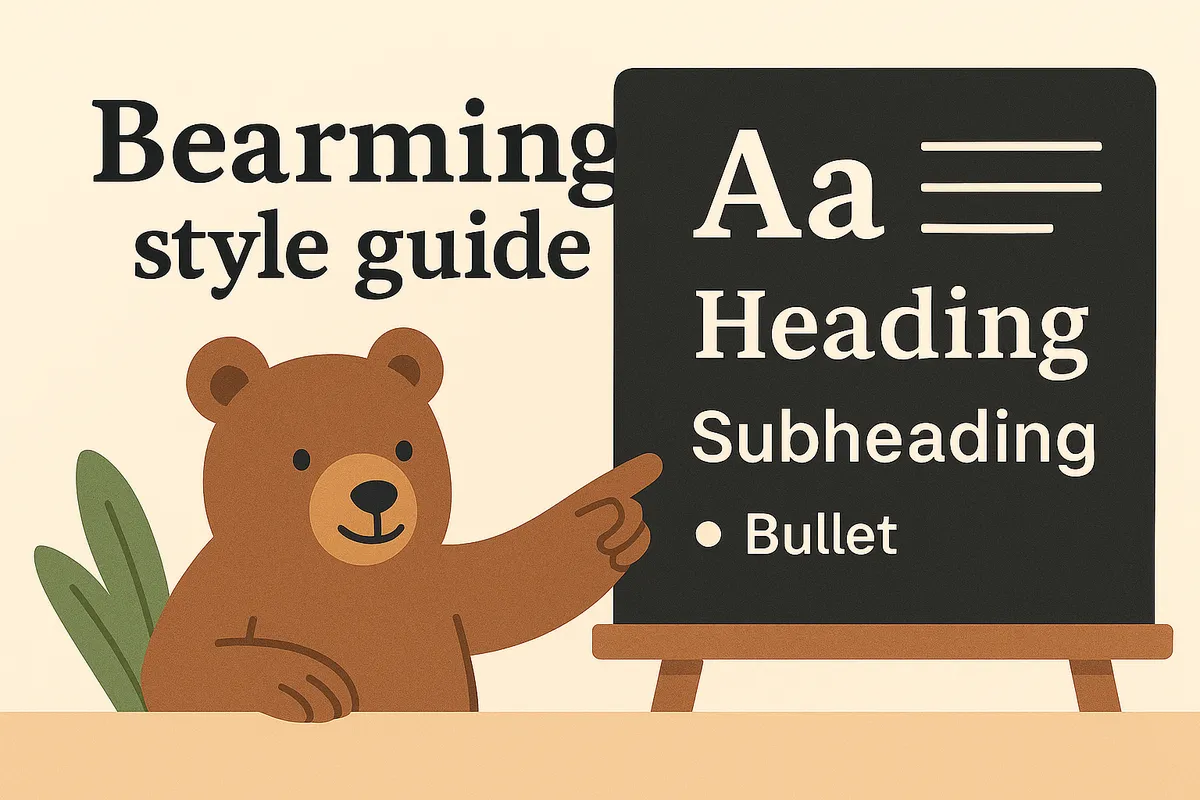
This style guide gives you a small tour of how the Bearming theme looks and feels.
Think of it as a behind-the-scenes look at Bearming, with enough guidance to help you understand it, and enough freedom to make it your own.
Menu
Headings
The H2s, as seen above, mark new chapters in your post. Think of them as small signposts saying, "New thought ahead."
- This text is a little thoughtful.
- This one is strong like a good coffee.
- This one is bold and loud.
- And this one is
taking a nap.
Heading 3: For sub-sections
When you want to tuck details under a bigger idea.
Heading 4: Quiet corners
Great for notes and side thoughts.
Links
Link out to lovely corners of the web, like Bear Blog or the Discover feed. See, even italicized links look great. And why shouldn't they? Not the strongest sales pitch, I know.
Sometimes you might want to let a link breathe on its own line and give it a bit more presence by making it bold:
Either way, keep links friendly and generous. The web is simply more fun when we actually link to each other.
Images
Here's how images appear. We could probably all use a few more of them, no matter what platform we're blogging on.

Wrap your image with <figure> and add a <figcaption> to get a nicely styled caption beneath it.

If you're curious, there's also a photo gallery lightbox that takes your images one step further.
Blockquotes
Blockquotes in Bearming aren't loud. They just lean in a little, like someone pausing to say something worth remembering.
Bearming doesn't overwrite your colors. It harmonizes with them, blending into your style, not the other way around.
And here's a bit of regular text alongside it, so you can see how it flows with the rest of your writing.
And yes, I'm quoting myself again. The
citetag begged for attention, so I caved. Robert
Just to show how it looks when you let your quotes sign their own name with a <cite> tag.
Details
Some things are worth folding away until someone actually wants them, a spoiler, a long list, an answer to a question nobody asked yet. That's what details is for.
Why do bears blog?
Mostly for the same reasons you do: to think out loud, to remember things later, and to feel a little less alone in the process. Also, dens get quiet in winter.
Click to open, click to close. Regular text picks right back up here too.
Asides
Sometimes a thought wanders off to the side, still worth keeping, just not part of the main path. That's what aside is for.
Regular text picks right back up here, like nothing happened.
Lists
Lists are great when your thoughts want a bit of structure. They help ideas line up, breathe, and feel easy to follow, whether they're wandering or neatly numbered.
Unordered lists
- Fresh air and a small idea
- A blank page
- A margin doodle or two
- Seeds for tomorrow's post
- A blog that feels like home
Ordered lists
- Brew something nice.
- Open Bear.
- Write what you mean.
- Skip perfection for now.
- Publish. Smile. Repeat.
That's lists. And this sentence isn't very interesting at all. It's just here to show how text looks when it comes right after a list.
Dividers
Dividers in Bearming are subtle. They're there to give your thoughts a bit of breathing room, not to shout "section break". You've already seen plenty of them throughout this guide.
Code and highlighting
When you want to highlight a short phrase or word, use the <mark> tag. It adds a wash of color that blends with the theme's accent, like this:
Here's a sentence with a little highlight in the middle.
You can use inline code to mention snippets or filenames, or switch to longer code blocks when you want to show an idea.
Even bears have their own style:
/* Ursus
   ------------------------- */
header {
  content: "ʕ•ᴥ•ʔ";
}
body {
  color: Brown;
}
footer {
  color: Black;
}
main {
  background: ForestGreen;
}
And here's a playful JavaScript example to wake things up a bit:
// Bear morning routine
function bearWakeup() {
  console.log("🐻 Write, blog, repeat.");
}
bearWakeup();
You can also add a copy code button that lets readers grab snippets with a single click.
Tables
Tables are great for organizing ideas or tracking progress, whether you're planning blog posts, travel notes, or your next creative experiment.
| Bear task | Status | Mood |
|---|---|---|
| Blogging | ✅ Done | 🐻 Content |
| Coding | 🧠 In progress | ☕ Focused |
| Reading | 📖 Planned | 😌 Calm |
Tables with numbers
Sometimes you just need to see numbers lined up neatly. The theme handles that too, keeping things tidy and the columns even.
| Item | Quantity | Rating |
|---|---|---|
| Blog ideas | 14 | 8.5 |
| Coffee cups | 3 | 9.8 |
| House visits | 6 | 7.4 |
No spreadsheets were harmed in the making of this table. Any resemblance to actual spreadsheets is purely coincidental.
Forms
Not every page needs one, but when you do, forms in Bearming stay tidy and easy to use, labeled fields, visible focus states, and buttons that don't shout.
That's a form. Nothing fancy, just clear fields and a button that knows its job.
Footnotes
Footnotes are a nice way to add context without cluttering your writing.1 Bear renders them automatically from standard markdown syntax and the Bearming theme displays them beautifully.2
The end
If you take a look down below, you'll see how the tags sit quietly at the end of a post, a bit smaller than the rest of the text, doing their job without making a fuss.
You'll probably also spot the upvote button nearby. It's lovely.
And that's the end of the style guide. Happy blogging! 🐻